 Mary Karr’s newly released The Art of Memoir couldn’t have arrived at a better time for me.
As bestselling author of The Liar’s Club, Cherry and Lit, and teacher of the form for thirty years, I couldn’t wait to devour her latest creation.
Written for both the “wannabe memoirist” and “general reader”, Karr’s passion for the reading, writing and teaching of her craft bursts through the door of every chapter.
As she tells her students:
“Listen up. I’m a passionate, messy teacher. I give a rat’s ass, and my sole job is to help students fall in love with what I already worship, which means, I show you stuff I’ve read that I can’t live without.”
(An extensive list of all the memoirs she has both read and taught stretches over five pages at the back of the book and had me gawping in awe.)
And this is what you get as you read on: a forthright, honest and in-your-face lesson as Karr pulls no punches, cutting to the chase by revealing the true nature of a memoirist:
“Unless you’re a doubter and a worrier, a nail biter, an apologizer, a rethinker, then memoir may not be your playpen. That’s the quality I’ve found most consistently in those life-story writers I’ve met. Truth is not their enemy. It’s the bannister they grab for when feeling around on the dark cellar stairs. It’s the solution.”
For anyone looking for validation in writing memoir, there it is, right there.
But there is a price to pay, and for anyone wanting to know what writing (great) memoir really feels like, Karr socks it to us:
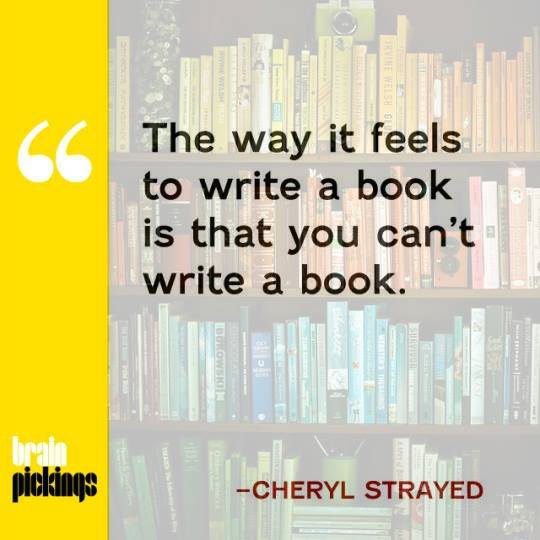
“In some ways, writing a memoir is knocking yourself out with your own fist, if it’s done right….The form always has profound psychological consequence on its author. It can’t not…… But nobody I know who’s written a great one described it as anything less than a major-league shit-eating contest…”
And just to make sure you really are ready to write memoir, she gives us chapter three: “Why Not to Write a Memoir: Plus a Pop Quiz to Protect the Bleeding & Box Out the Rigid”. (Her chapter headings intrigue as much as the content).
She never makes the reader feel like a failure or an idiot, but by the time you finish this chapter, you’ll know without a doubt whether memoir writing really is for you. Or not.
As Karr launches in, she delves deeper into the writing process of memoir, striping it down layer by layer, peppered throughout with quotes from some of her favourite memoir reads and authors, while sharing the evolution of her own process.
Her frankness and honesty coupled with her generosity in exposing her struggles and successes, as well as offering practical advice about tricky challenges such as: Dealing with Beloveds (On and Off the Page) – (chapter twelve) – makes for compelling reading.
Truth in memoir is huge for Karr and she takes time to explore how our different concepts of memory can play havoc with our story-telling. Ultimately, she believes that when the truth is fudged, a memoirist is “…missing the personal liberation that comes from the examined life”. I agree.
She also explores “Sacred Carnality”, as in the vital importance of conjuring up the physical world for the reader (smell, taste, touch, image and noise). She writes of the memoirist’s “Internal Struggle” and how we reveal it as we write, but her passion takes off in leaps and bounds when she writes of “Voice”:
“Every great memoir lives or dies based 100 percent on voice…For the readers, the voice has to exist from the first sentence.”
And again, towards the end of the book, she writes:
“Most memoirs fail because of voice. It’s not distinct enough to sound alive and compelling.”
Karr’s desire to show us how to bring our own unique, passion-filled voice to memoir pulses with heart and energy throughout this excellent read, so that by the end of it, you feel as if you have just taken a one-on-one master-class of ‘How To Write A Great Memoir’ with the best teacher you are ever likely to have.
*Thank you to Harper Collins who provided a review copy of this book.

















































 A View From My Summerhouse