Before my recent and first-ever visit to the beautiful island of Jersey, I knew of its famous Jersey cows, delicious Jersey Royal new potatoes, and stunning coastline. I also knew something of its occupation under Nazi Germany in WWII, but, and to my shame, I knew very little of its impact on the people of Jersey. All that was about to change.
As I crossed the English Channel by Ferry with my mother on May 7th for our much-anticipated getaway, as soon as I caught sight of the delightful view from our hotel room some seven hours later, I knew we were in for a treat.

View from our room

Elizabeth Castle

View at Nighttime
The next day – after taking in the surprising results of the General Election back home – we set about exploring. And learning.
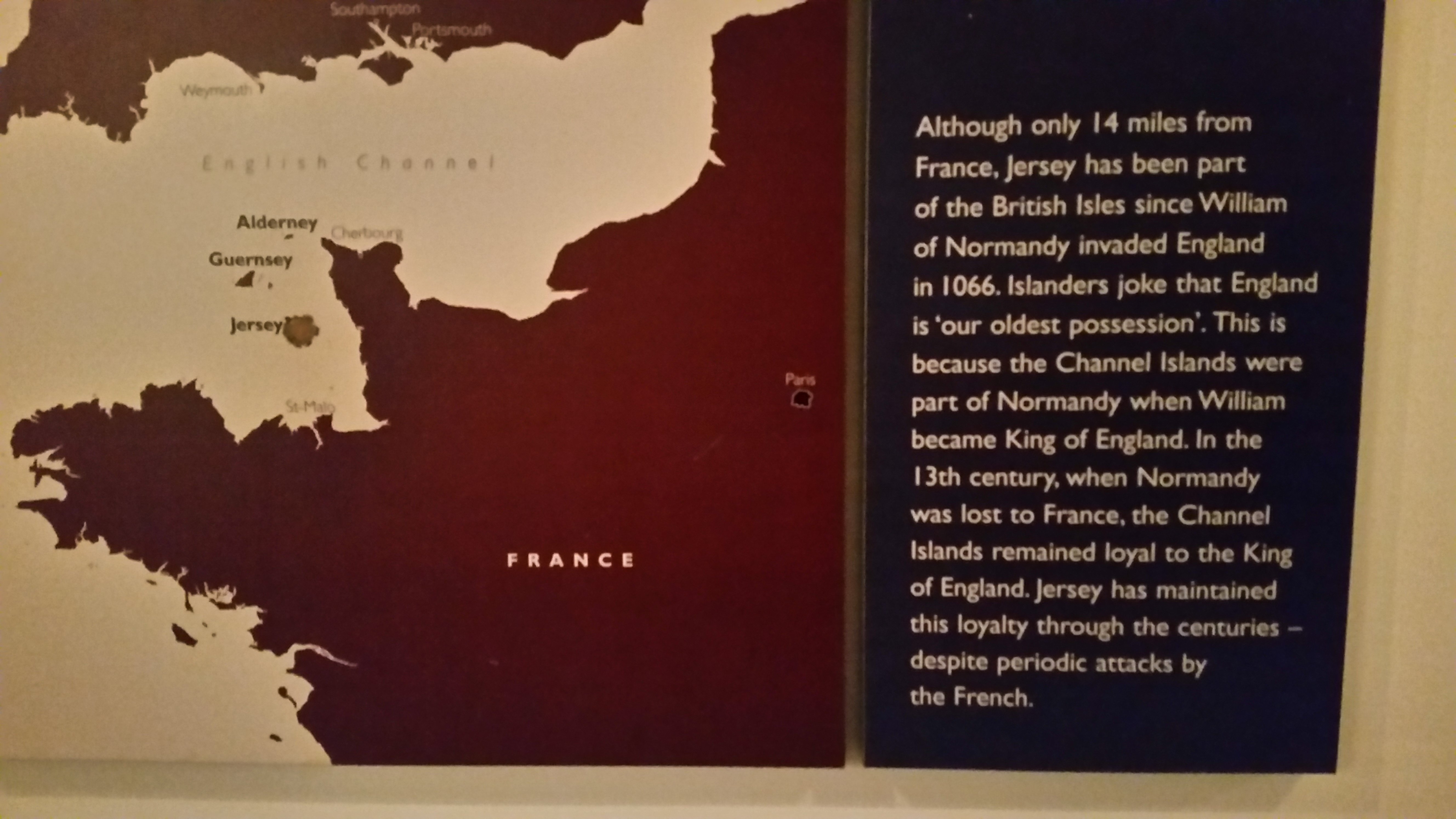
Although closest to France, Jersey has been part of the British Isles ever since William of Normandy’s invasion in 1066 ~

Courtesy Jersey War Tunnels
Some 100 miles south of British mainland and only a mere 14 miles from the Bay of St Malo in France, Jersey is the largest of the Channel Islands despite its 14km by 8km (9 miles by 5 miles) size.
It is home to a varied landscape of lush valleys and fields inland, and unspoilt coastline of golden beaches, rocky coves and hidden bays, all with stunning views of the Atlantic.
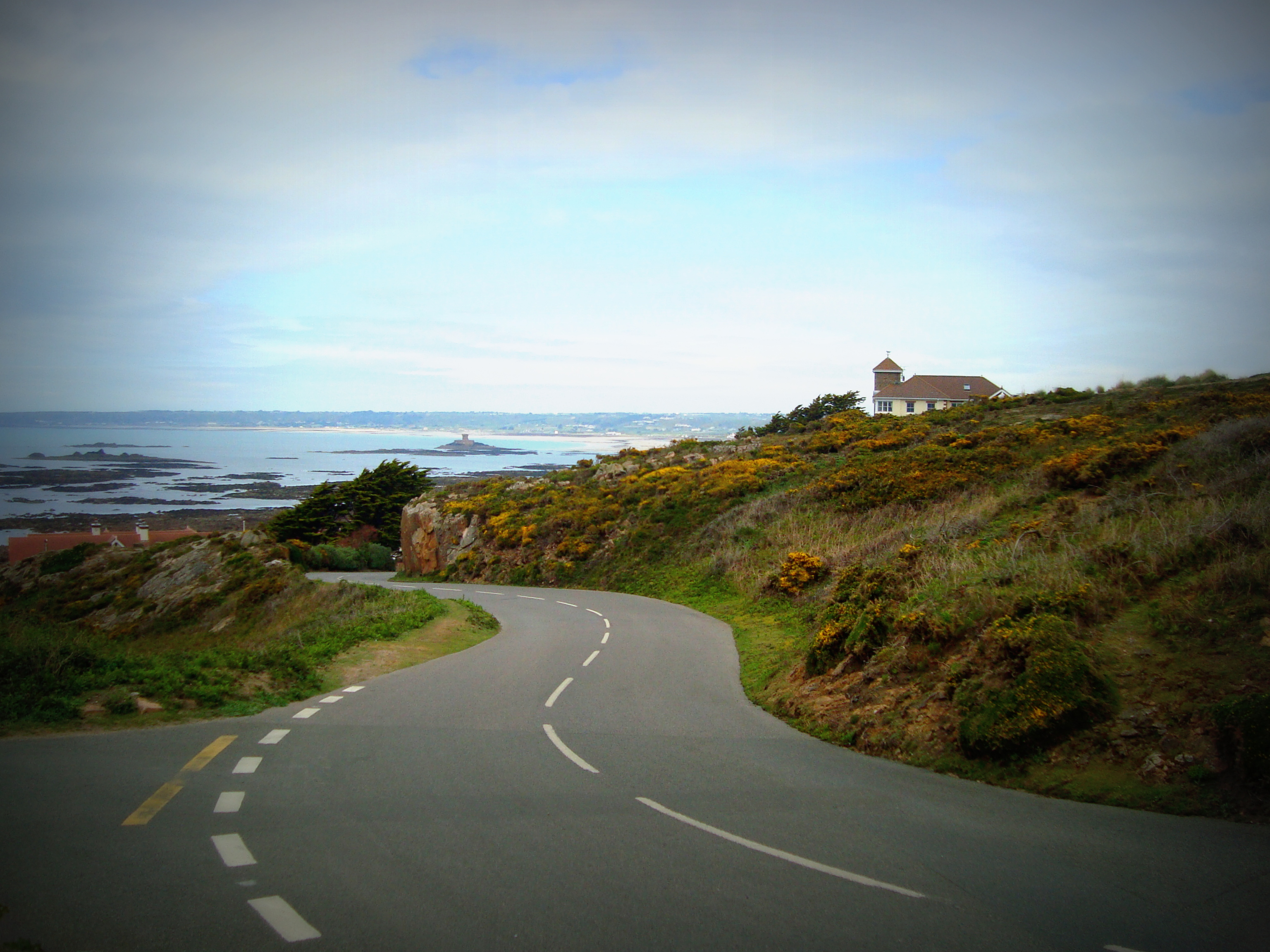
Jersey boasts a 450 mile roadway made up of fast routes and rural lanes, so that whether driving, walking, cycling or even horse riding, anyone can explore this beautiful island to their heart’s content.
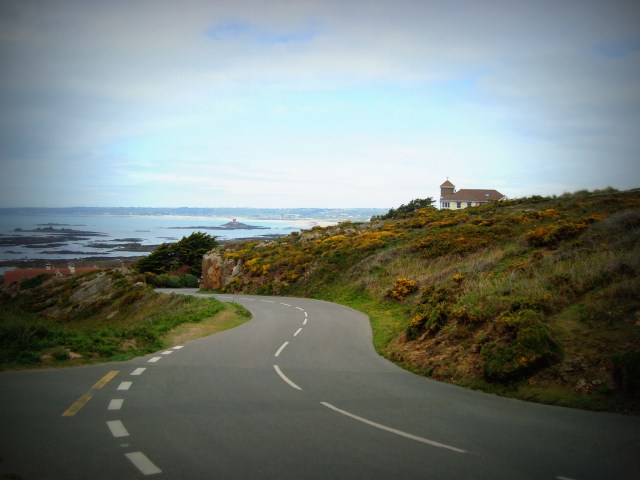
Take a drive – or walk, or bike or horse ride – with me along this delightful island of Jersey
(c) Sherri Matthews 2015
Corbiere Lighthouse shines its beacon of light for many a passing ship to warn of strong tidal waters and treacherous, submerged rock formations ~
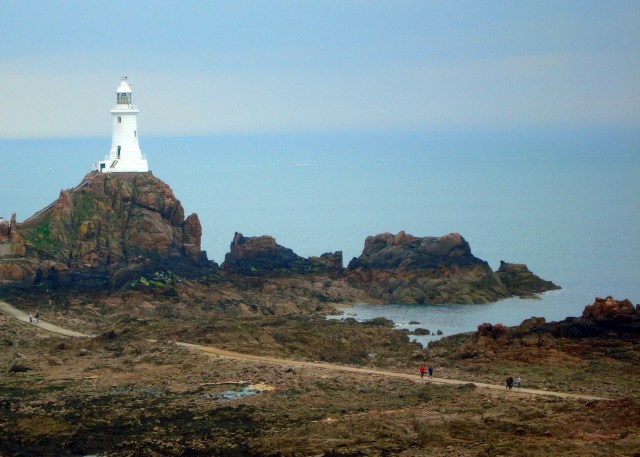
Corbiere Lighthouse, Jersey
(c) Sherri Matthews 2015
Everywhere, the views are stunning ~
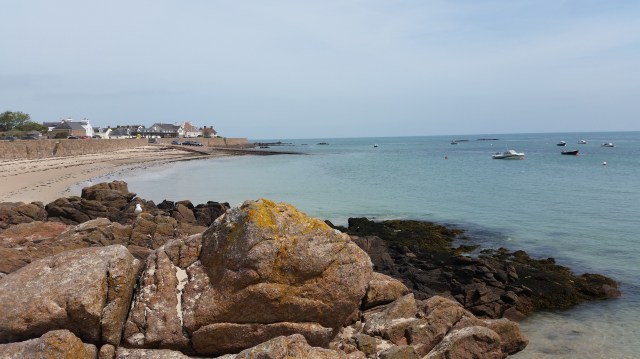
Rocque Point Jersey
(c) Sherri Matthews 2015
(Rocque Point Lookout, St Brelade’s Bay & Elizabeth Castle)
Yes, Jersey is a little slice of heaven on earth, but it also holds a long, complex history and a dark past.
On 28th June, 1940, the Germans bombed Jersey killing 10 islanders, and by 1st July, the entire island had no choice but to surrender. Invading German soldiers built lookouts, bunkers and fortresses to protect the island from British attack, but the attack never came as the war effort focused elsewhere.
No one could have imagined then that the German occupation of Jersey would last five years.
It was while walking through the Jersey War Tunnels that the full extent of the impact of those long years of occupation really struck me. Also just how close Nazi Germany came to invading British mainland shores.
Spending a good two hours walking through the tunnels, which even on a hot day feels chilly inside those caves, takes you through a timeline from the day the Germans first arrived in Jersey to the time they left.
Throughout the Tunnels, stories of the very human side of war speak through written nuggets of excerpts from diary entries and letters, bringing home the deeply personal stories of everyday people, from both the islanders’ and the German soldiers’ points of view. Each story is profoundly moving, telling stories of their reality as it was in those war years.
For the Germans, it occurred to me that they probably couldn’t belive that they had been given such an prime posting, and then I read this:
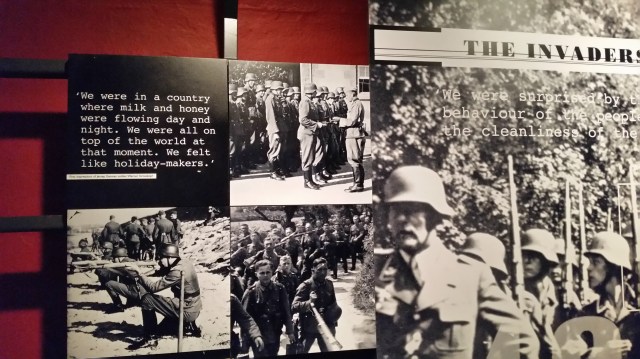
Obviously, the islanders viewed the Nazi’s parading throughout their country as a very different thing altogether: all received notice to register for evacuation, with twenty-four hours to do so.

One day, living, eating, spending time with your family, and the next, your life turned upside down, everything lost for good
Photo Sherri Matthews, Courtesy Jersey War Tunnels
Nearly 50% of the islanders registered to evacuate, but some, once arriving at the quay and seeing so many people crammed in the boats like sardines, changed their minds and returned home. Shockingly, some did so only to discover that looting had already taken place, their homes cleaned out, and for some, even the carpets removed.
Such is just one of the many devastating repercussions of war.
For those who travelled onward by passenger ship, mostly to Weymouth, their lives changed forever. For those who stayed, an order from German headquarters arrived stating that those of Jewish origin, and all not born on the island, to be rounded up and deported to Germany, some to concentration camps. Many did not return.
While the Germans at first felt like tourists in Jersey, bitterness, accusations, whisperings of betrayals and resentments surfaced, tearing local people and their families apart as some bartered for bigger rations and worse, befriended some of the German soldiers.
The Nazi’s brought in slave workers from Eastern Europe to work on the tunnels, building a safe hospital, amongst other things, for German soldiers. The slaves worked under harsh conditions to say the least, but the tunnels were never finished.
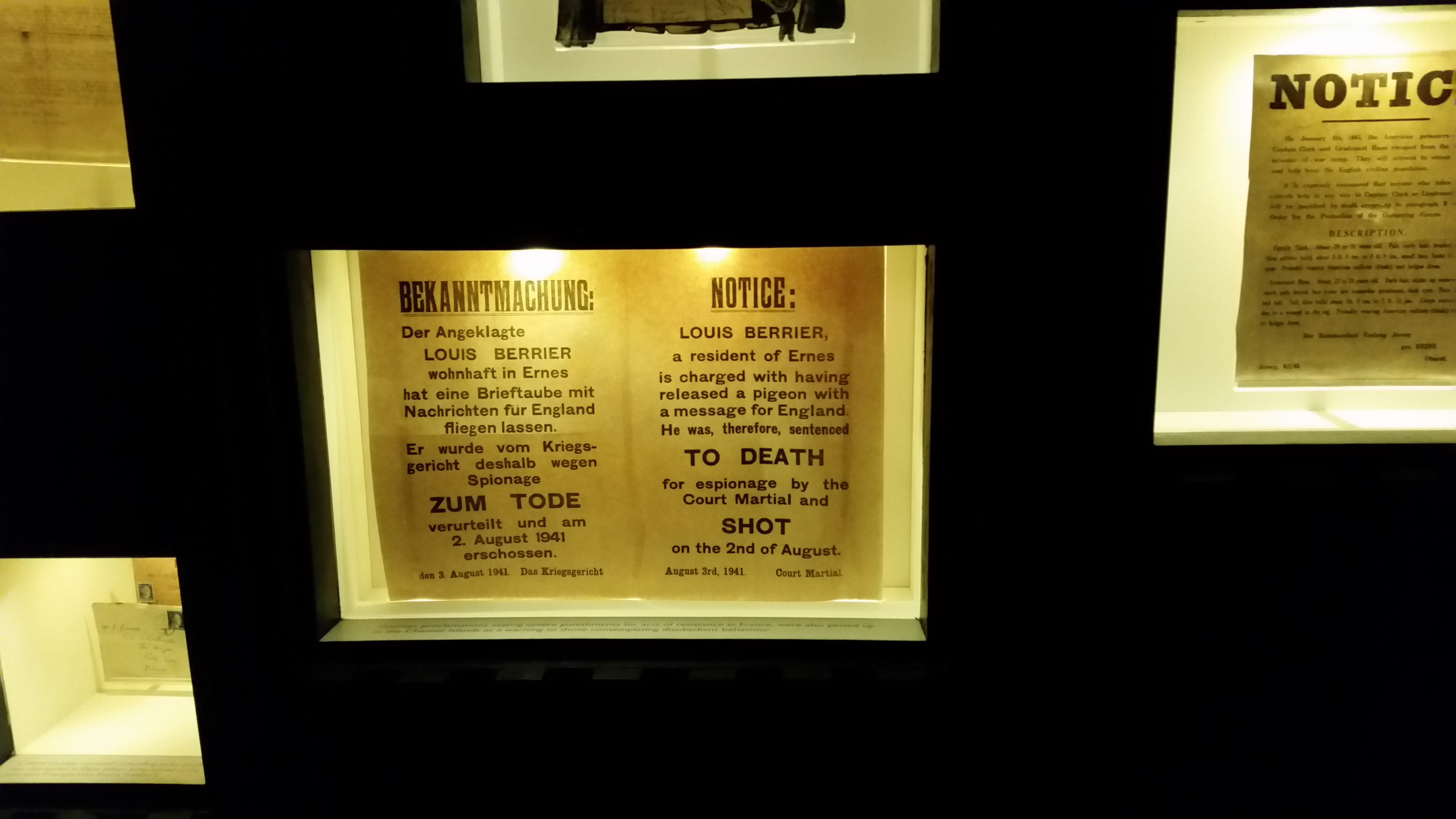
Execution was the punishment for crimes such as trying to escape, keeping crystal radios after the wireless radio ban, and general acts of disobedience, as in the case of poor Louis Berrier, who released a pigeon with a message for England:

Courtesy Jersey War Tunnels
One sad story particularly struck me of a young woman who fell in love with a handsome German solider which, of course, was an absolute no-no. They made plans to escape, the soldier wanting to desert, but they were found out.
The Bailiff running the island (who had the near-impossible task of keeping relations between the islanders and the soldiers as amicable and as peaceful as possible, as per his instructions from the British Government), was able to intercede successfully for the young woman’s life, but not for that of the soldier, who was duly shot for desertion.
Another story was of a little girl (now a woman in her late 70s and still living on the island) given a bag of sweets by a German soldier, who told her he missed his little girl back home. In such harsh times of severe rationing and going without, she was, of course, absolutely delighted, but her mother, disgusted that her daughter should receive anything from a German, threw the sweets away.
The little girl could never understand her mother’s actions and hatred of the ‘nice’ German soldier.
Then, at last, on 9th May, 1945, came Liberation Day.
By that time, food supplies were cut off and all, including the Germans, were near-starving. At last the British Red Cross delivered food parcels containing items such as tea, coffee and sugar, the likes of which the islanders hadn’t tasted in years.
The Germans were given strict instructions not to touch the food parcels, and they had no choice but to eat limpets off the seashore and shoot seagulls and cats for food to prevent starvation.
The British landed on 9th May, 1945; the very first act by two Naval Officers was to rip down the swastika flag that had hung from the Pomme D’Or Hotel for five long years, replacing it with the Union Jack to the deafening cries of the jubilant crowds below.
And so it was that on 9th May this year of 2015, celebrating the 70th anniversary of Liberation Day as part of VE Day celebrations held across Europe, my mother and I watched enthralled, as the day’s reenactments took place.
The Pomme D’Or Hotel in St Helier as it was in 1945, appears in a photo superimposed on a huge canvas draped across the original hotel (left photo below), the newer hotel standing next door (right photo).
On the balcony this May 9th, stood military personnel wearing replica uniforms of the day, waving to the crowds just as they would have exactly seventy years before. And now as then, the crowds cried out in joyous delight.
A sculpture stands in Liberation Square in St Helier’s to mark this occasion, and some ‘veteran’ wartime officials also turned out for the day’s festivities (including a Captain Mainwaring look-alike I thought…) ~
A parade of vintage cars and military vehicles, marching bands and troops left the Square which we followed all the way to People’s Park, where the Countess of Wessex took part in prayers and a ceremony to mark this special Liberation Day ~
This slideshow requires JavaScript.
The ceremonies ended with the raising of the Jersey Flag. Unfortunately, the weather wasn’t brilliant but at least the rain held off – just ~
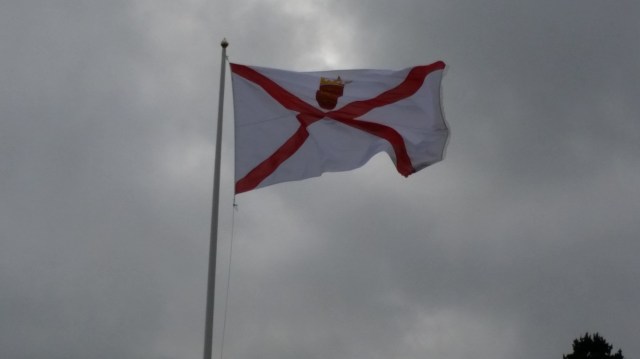
Jersey Flag flies high to celebrate the 70th anniversary of Liberation Day
(c) Sherri Matthews 2015
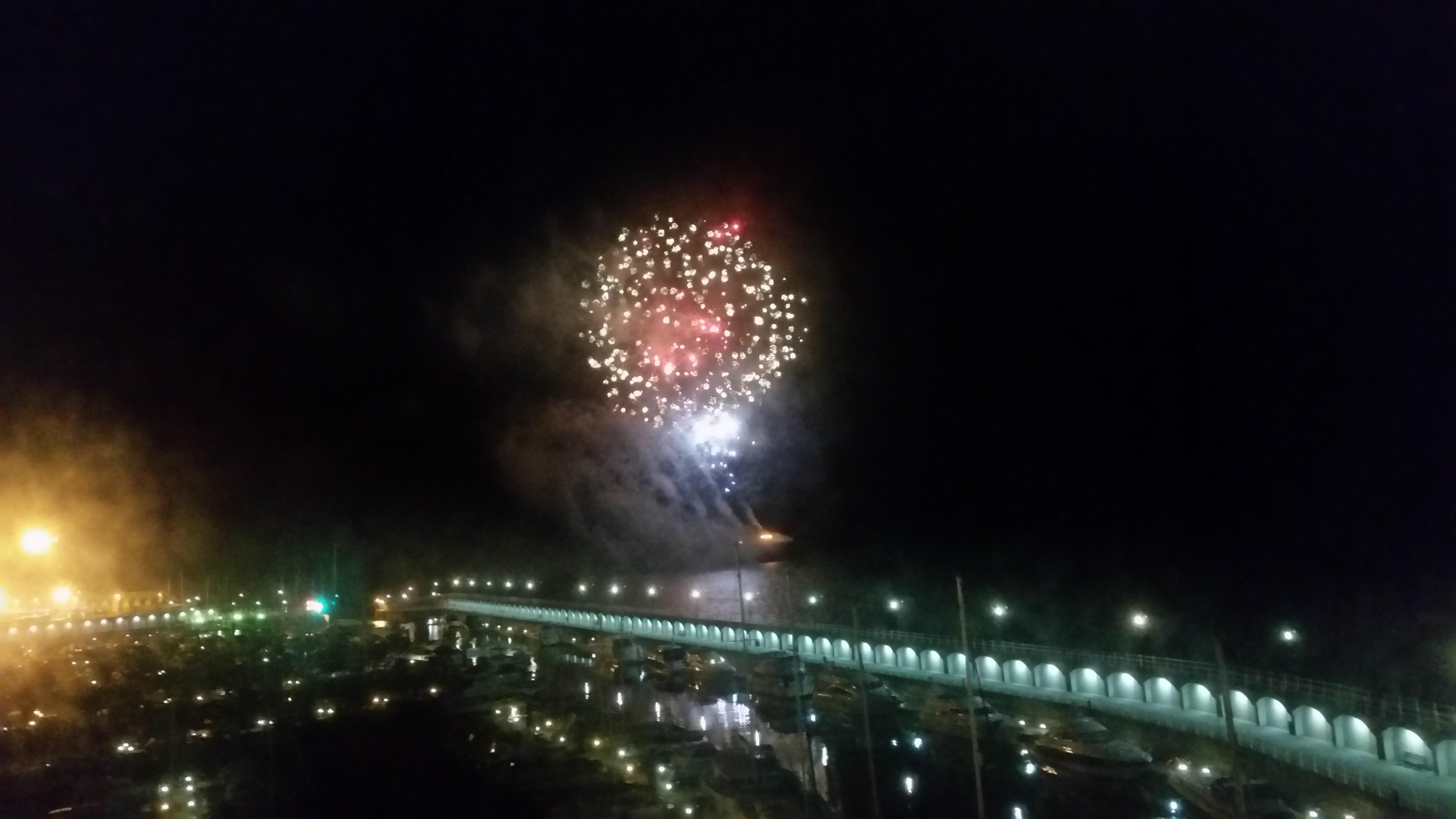
Street parties, vintage teas, dancing and celebrations into the night recreated the thrilling atmosphere as it must have been in 1945, ending with a huge firework’s display from Elizabeth Castle, as seen from our hotel room (a bonus we hadn’t planned on) ~

Fireworks from Elizabeth Castle
(c) Sherri Matthews 2015
Two things stayed with me: on the day that the German soldiers were at last shipped out of Jersey, the crowds fell silent as they stood on the quay and watched them leave, or as better described below (which I hope isn’t too small to read):
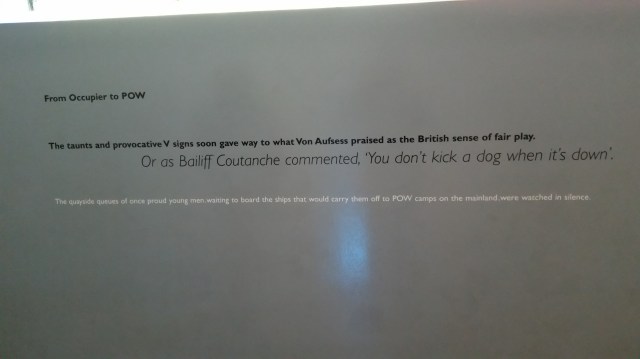
Courtesy Jersey War Tunnels
And the second was this: the footprint of a jackboot left in what was once setting cement – right at the bottom of an escape tunnel discovered deep inside the bowels of the War Tunnels. There is only one footprint, and it’s facing towards the escape route. Did the wearer escape, I wonder? And if so, what happened to him? One of life’s mysteries, but one from which so many stories could be told.

Jackboot footprint – Courtesy Jersey War Tunnels
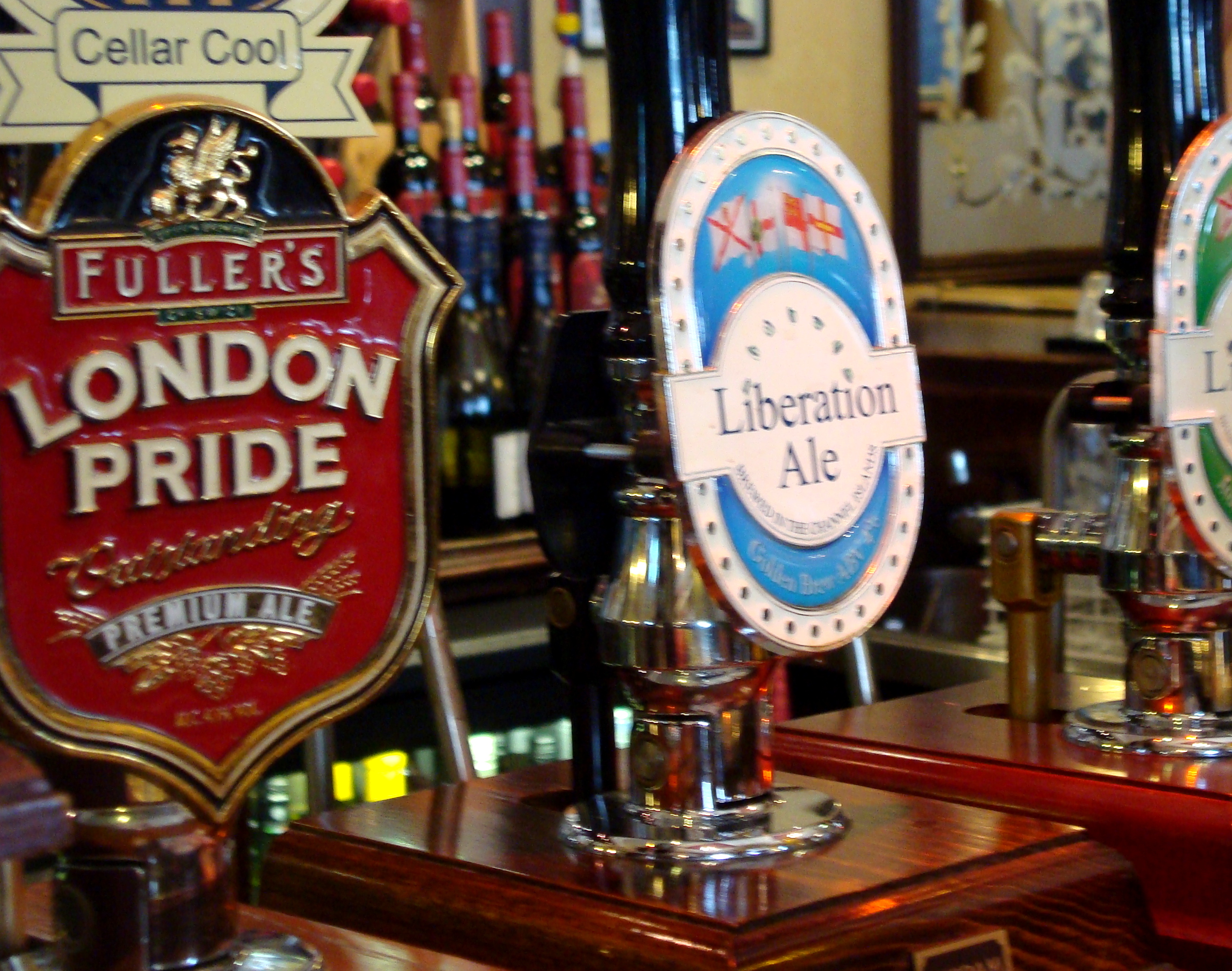
Jersey is one of the most beautiful places I have ever visited, and the people so welcoming, friendly and charming. They even have their own ale:

Liberation Ale (c) Sherri Matthews 2015
The deprivation and war-time suffering of people living under occupation by an invading force can never be underestimated; it is impossible for those of us who have never experienced it to truly understand the true impact of such a life.
But as long as future generations keep the message of liberation and freedom alive in their hearts, as do the people of Jersey, the hope remains of lessons learned and history no longer repeated. It was an honour and a privilege to have visited them and their home during such a momentous and historical time of celebration. Thank you so much, dear Jersey.
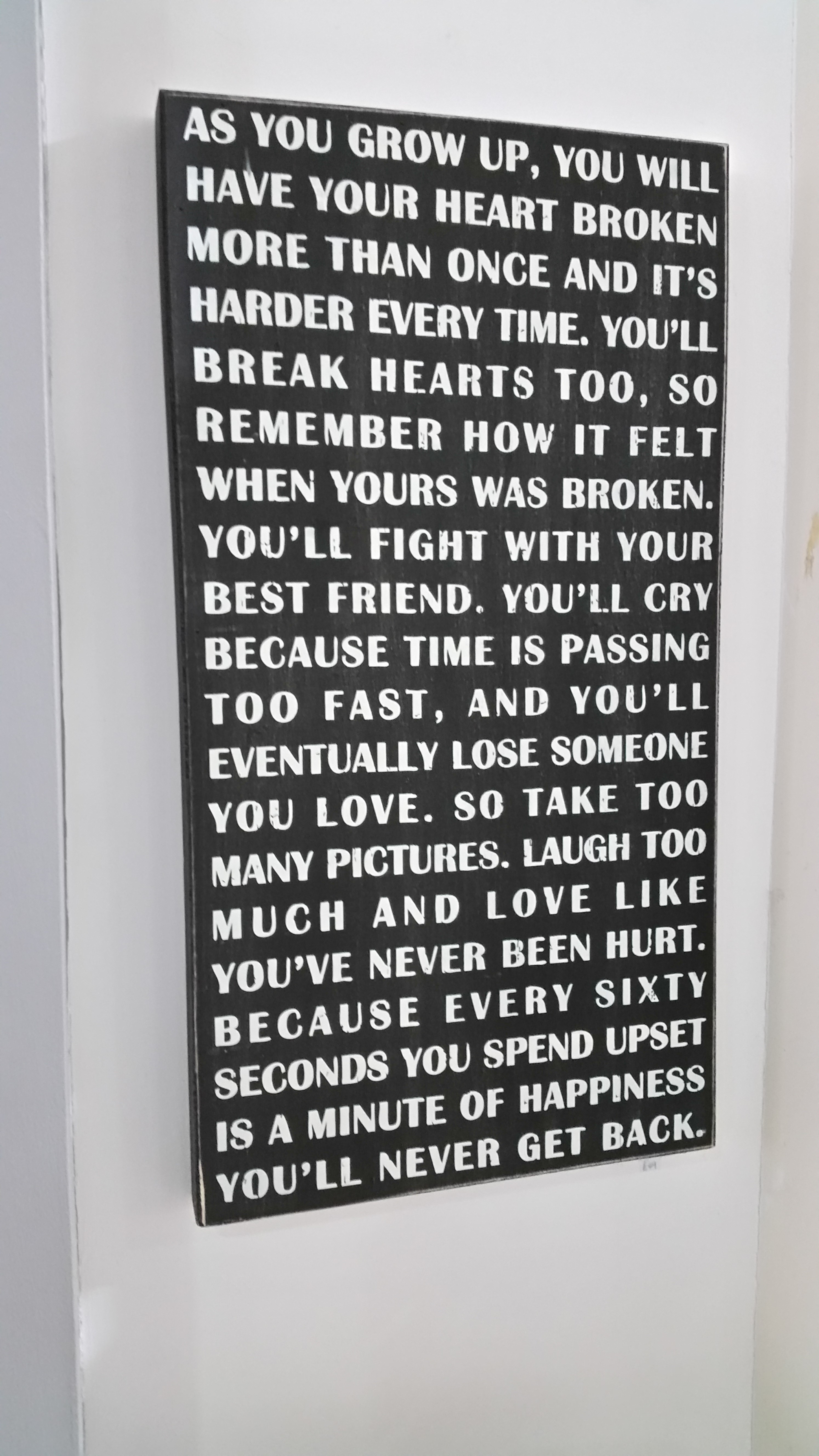
I leave you with these poignant words:

Courtesy Jersey War Tunnels
Thank you for sharing the view with me today and may your day be filled with
many minutes of happiness.













































































 A View From My Summerhouse